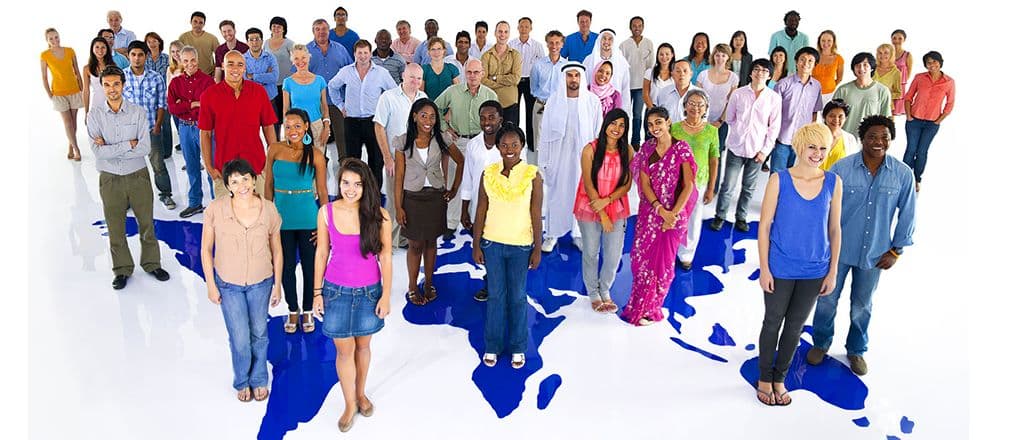
1. Why Individual Differences Matter
People are complicated. We know it — we can see it, hear it, and feel it — and yet we consistently underestimate just how different we really are from one another.
Why are some people fussy about punctuality while others are perpetually late? Why do some thrive in crowds while others actively avoid them? Why are some individuals consummate givers and others consistent takers? Why do some relationships deepen over decades while others collapse at the first sign of tension? The obvious answer — that people are complicated — is accurate but insufficient. The more revealing answer involves personality.
These differences are not random. They reflect stable patterns of thought, feeling, and behaviour that are rooted in our personality traits — and those traits have been shown to predict, with meaningful reliability, how we will behave in a wide range of situations, including how we perform in teams, how we respond to leadership, how we handle conflict, and how we sustain (or fail to sustain) trust in professional relationships.
The stakes are high. Around 15% to 39% of people have personality disorder traits severe enough to impair normal function [RCPsych]. An estimated 4% of CEOs exhibit clinical levels of psychopathy, and as many as 1 in 25 individuals may be clinically sociopathic. The proportion of the working population with sub-clinical dark traits — those who function normally but whose personality dynamics create predictable interpersonal difficulties — is considerably higher than most organisations appreciate.
Despite knowing this, we often treat people as if they were interchangeable. We assume consistency where there is variability, predictability where there is complexity, and good will where there is self-interest. These assumptions cost us dearly — in failed relationships, dysfunctional teams, and avoidable corporate failures.
This article aims to close some of that gap.
2. The Diversity Paradox
Most organisations invest in diversity and inclusion programmes. Most of those programmes focus on the visible, ‘shallow level’ dimensions of diversity: age, gender, race, sexual orientation, religion, and disability. These matter enormously — but they only scratch the surface of the ways in which people are truly different.
It is the deep-level variables of diversity — personality traits, values, cognitive styles, and behavioural tendencies — that most frequently drive the interpersonal problems that corrode trust, fuel conflict, and erode the social cohesion that high-performing teams depend on. These are the dimensions of diversity that manifest through unconscious bias rather than conscious prejudice. They are harder to see, harder to name, and harder to address.
2.1 The Homophily Effect
There is a fundamental paradox at the heart of diversity initiatives: while research consistently shows that diverse teams outperform homogeneous ones on a range of complex tasks, human beings are naturally drawn to people who are similar to themselves. This tendency — known as Homophily — is one of the most robustly established phenomena in social science, having been observed in more than 100 network studies.