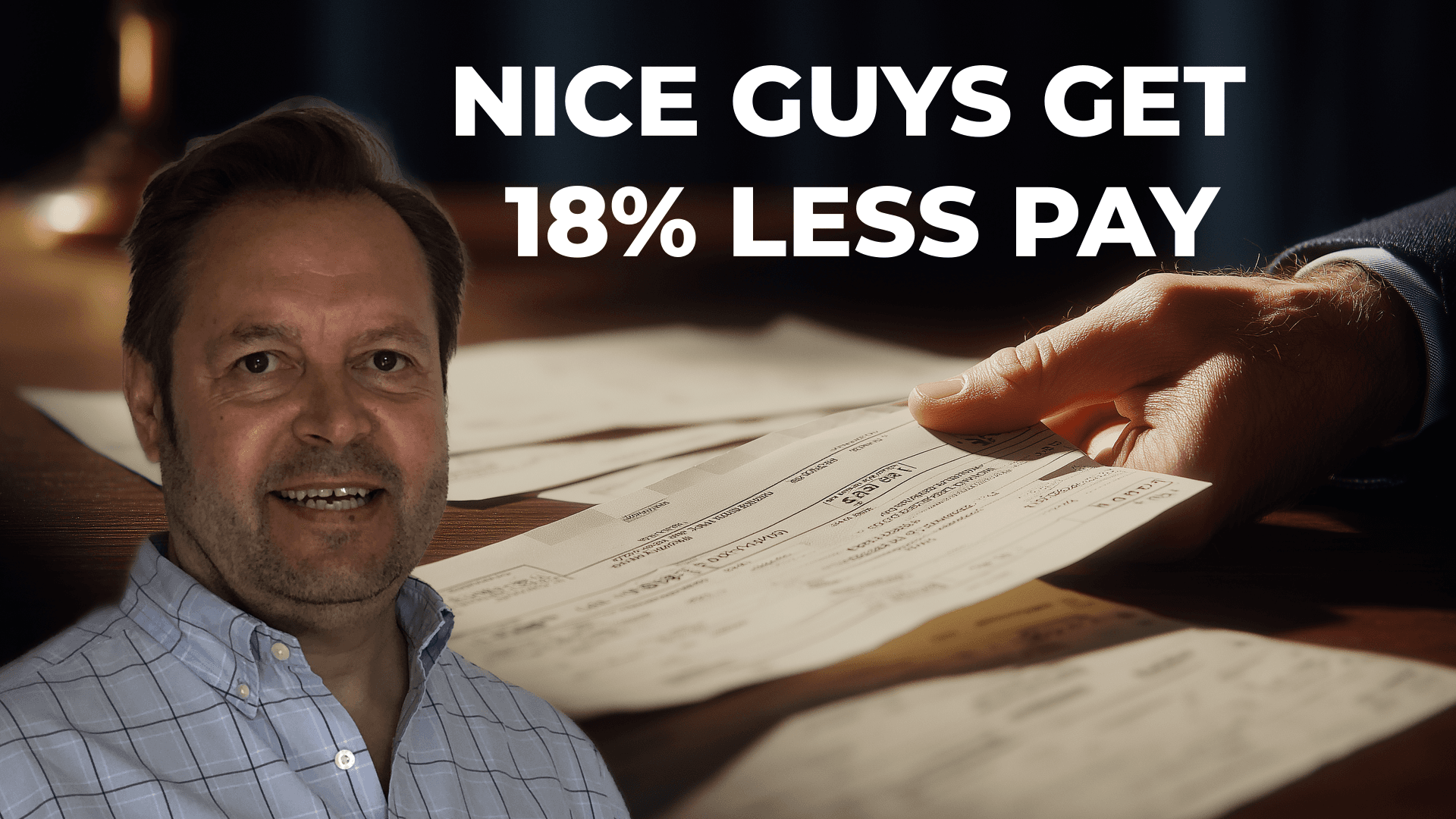
Nice guys never win — or do they?
Of all the Big Five personality traits, agreeableness is the one we most often misread, and the misreading is built into the name. Compassion and politeness sound purely good; bluntness and competitiveness sound purely bad. But personality traits are normally distributed, which means there are real advantages and real costs at every point on the scale. That is what makes agreeableness, on careful reading, the most conceptually complicated of the five.
Agreeableness is the trait that governs how much weight you give other people's interests relative to your own. High scorers are warm, trusting, generous, humble and cooperative — genuinely pleasant to work with and, across life as a whole, an asset. The most authoritative review to date, covering 142 meta-analyses and more than 1.9 million people, found agreeableness runs in a desirable direction for 93% of outcomes (Wilmot & Ones, 2022). Nice, it turns out, is mostly good for you.
The complication is where the costs land: squarely on the arenas where careers are decided. The landmark study found highly agreeable men earn substantially less than their disagreeable peers — by some estimates up to a quarter less — with a much smaller penalty for women (Judge, Livingston & Hurst, 2012). The reason isn't that niceness is unproductive; it's that highly agreeable people under-advocate for themselves. They concede early in negotiations, avoid the conflict that change requires, and quietly absorb work and discount their own claims to credit, pay and promotion.
It helps to look beneath the headline trait at its six facets — Trust, Straightforwardness, Altruism, Compliance, Modesty and Tender-Mindedness — because they don't move together. The engine of most agreeableness costs is very high Compliance: the deep reluctance to enter or sustain conflict. Over time, the person who always says yes accumulates a silent ledger of resentment; the person whose altruism has no off-switch becomes the team's dumping ground and burns out.
The answer, though, is not to become disagreeable. The chronically antagonistic impose their own costs — a single difficult team member can drag a whole group down (the "bad apple" effect), and at its extreme low pole agreeableness forms the core of the dark triad and the DSM-5 Antagonism domain. The profile the evidence rewards is neither the relentlessly nice nor the reliably hard. It is the person who can be warm and firm by turns: who cares enough to tell the truth, who says no without guilt and yes without resentment, and who negotiates as hard for themselves as they would, instinctively, for someone they love.
So do nice guys never win? In pay, negotiation and self-advancement, the nicest competitors do tend to finish behind. But the framing is the trap. The people who win and live well are the agreeable who have learned — deliberately, and without apology — to fight their corner when it counts, and then go back to being kind.
Read the full evidence-based guide → [Nice Guys Never Win: The Agreeableness Paradox]